


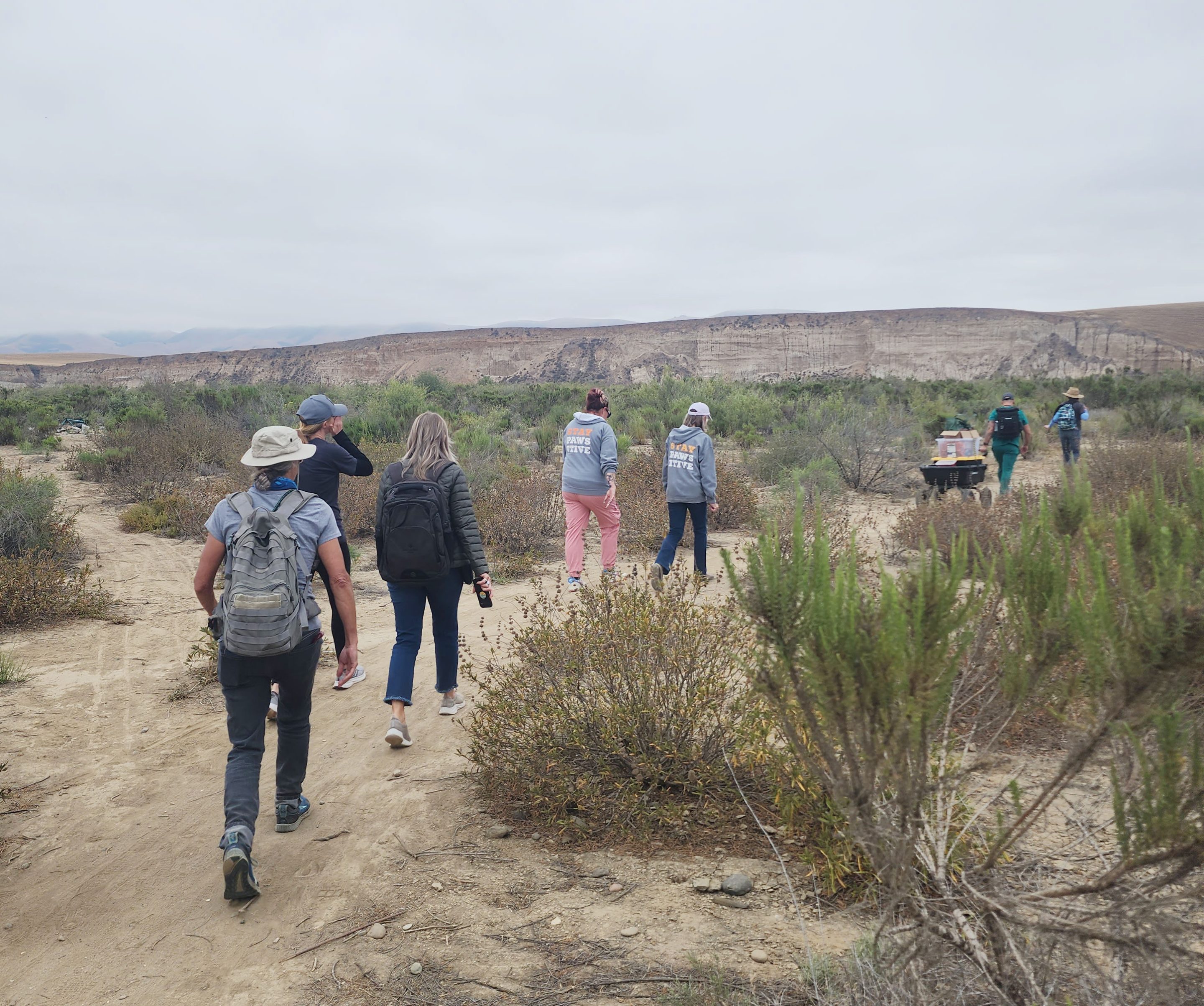
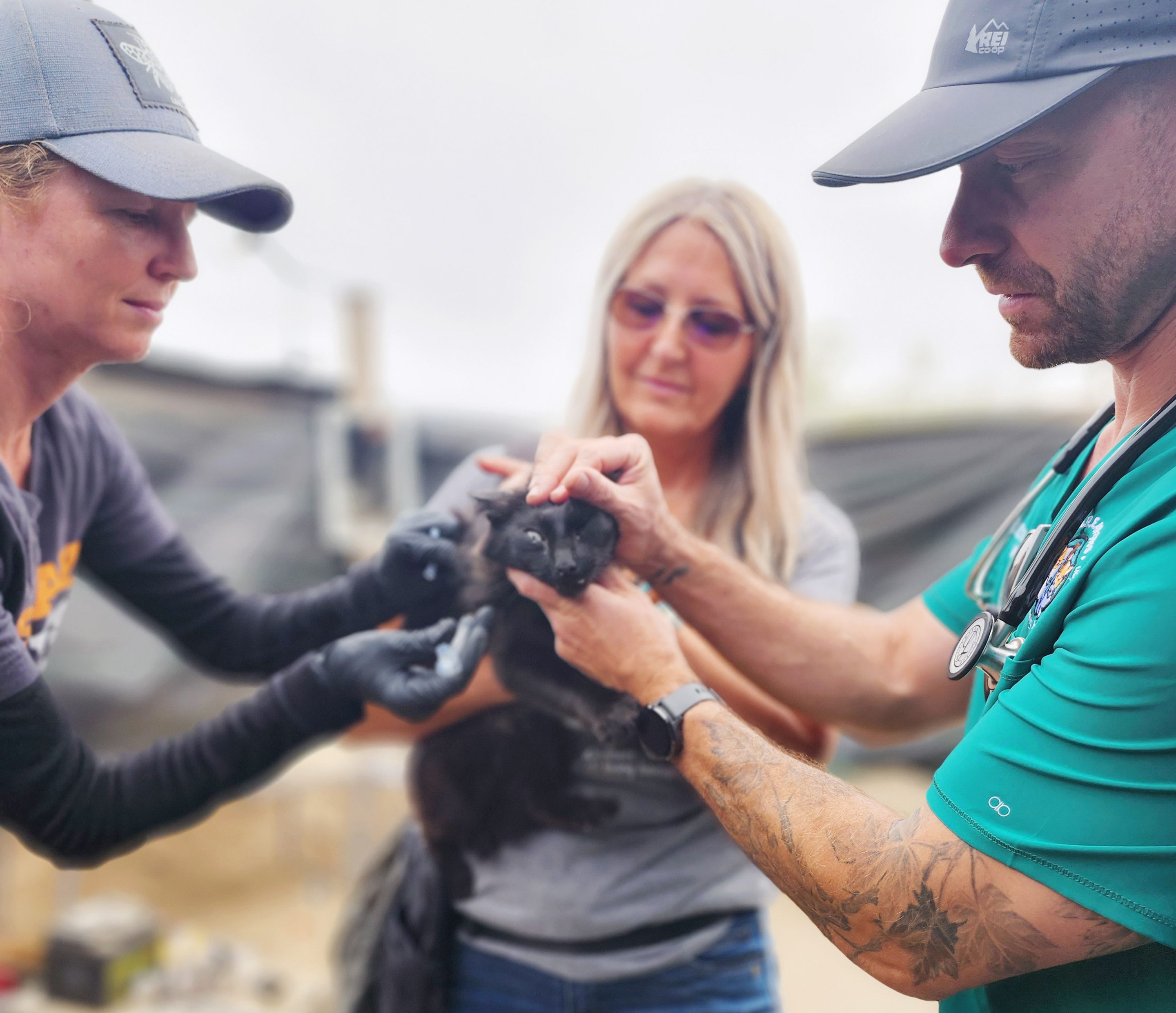
On June 8, members of C.A.R.E.4Paws, the Street Dog Coalition, and Santa Barbara County Animal Services journeyed into the riverbed with Gorilla Carts full of vaccines and parasite treatment in search of unhoused pet families they could provide with physical examinations and vaccines. The effort was the fourth pet wellness event C.A.R.E.4Paws and Street Dog Coalition hosted in the Santa Maria Riverbed since the county and others started removing encampments last August.
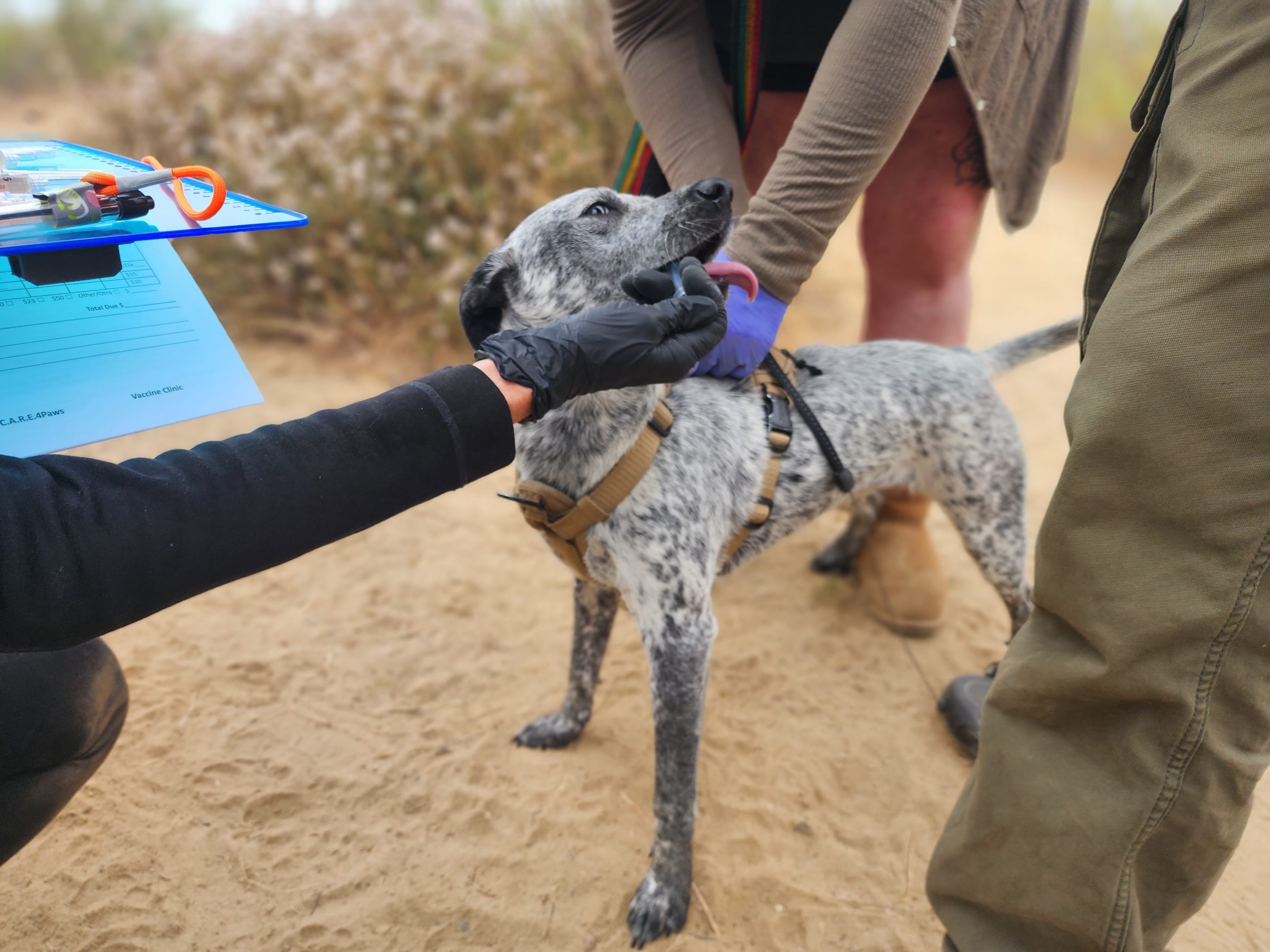
Along with rabies, distemper, and Bordetella vaccines, volunteers offered free bags of pet food, water, Greenies treats for pets’ teeth, wipes for eye infections, harnesses, and edible broad-spectrum de-wormer. Santa Barbara County Animal Services also provided microchips and dog licenses.
“We’re not a full-service vet, but we can do a lot of the basic care,” C.A.R.E.4Paws co-founder and executive director Isabelle Gullö told the Sun before the June 8 event. “When we roll out our mobile units [like these in the future] … any family that struggles to pay for basic services can show up and get them for low cost. If someone can’t afford to pay, they can pay on a sliding scale, or we will comp their services, depending on their situation.”
While passing through a dusty trail in the riverbed, Mobile Clinic Services Coordinator Christy Todek said the clinics operate Tuesday to Friday and every other Sunday in Santa Barbara and San Luis Obispo counties.
“The mobile clinic is our largest program now. Last year, we helped 19,200 dogs and cats through that program alone, Gullö told the Sun. “Every Tuesday, we’re in Lompoc. Every Wednesday, we’re in Santa Maria. Thursdays, we usually go to Grover Beach. And the first Sunday of every month, we’re in Oceano.”
The June 8 clinic was designed specifically for unhoused pet families. The three organizations said they plan to host mobile clinics specifically for such families every three months.
Volunteers are especially cautious about respecting pet families and their encampments—they always ask permission before entering and don’t force any services they don’t want.
“You don’t have to be away from him very long,” one volunteer said to a pet parent. “He’s your buddy.”
Gullö said that going out into the community and reaching unhoused people where they’re at helps show them their pets are in good hands. Now, 16 years in, C.A.R.E.4Paws assists more than 25,000 pet families every year through such services.
“We want families to stay together,” Gullö said. “We have seen firsthand what happens when pets and their parents get separated. We want to prevent that. We want to keep pets healthy, happy, safe, and with the people who love them.”
For more information about wellness clinics and C.A.R.E.4Paws’ Tuesday initiative, call (805) 968-2273 or visit care4paws.org.
Select “Support pet families in the riverbed” from the “Where do you want your donation go?” dropdown menu.